By Matt Branum, Development Engineer, Innovize
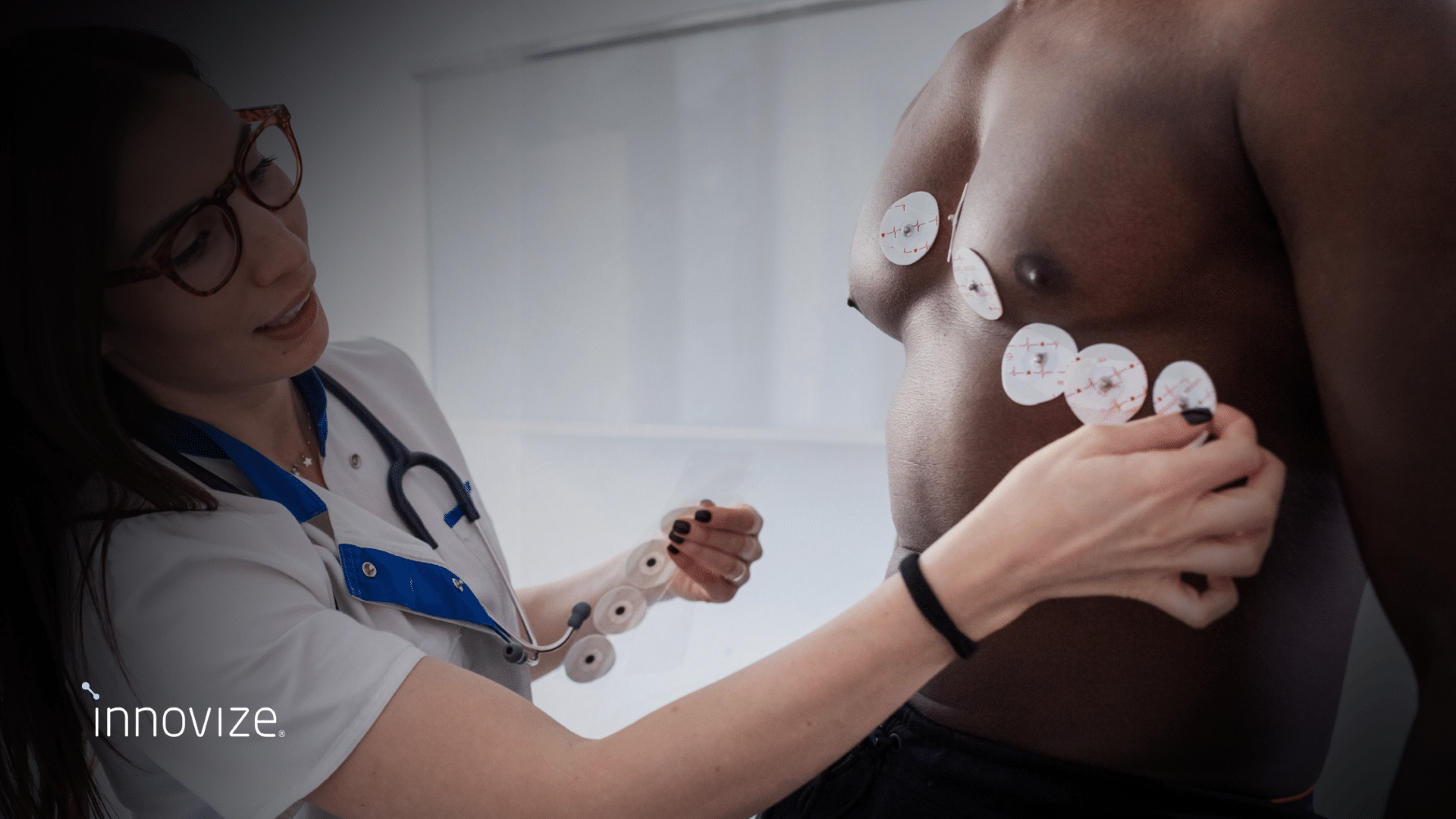
Hydrogels offer the world of wearable medical devices conformability, skin contact comfort, and, in some formulations, conductivity for sensing applications. But these same unique properties create a narrow and highly sensitive manufacturing window, especially when the material must be converted, laminated, die cut, packaged, and stored without losing performance.
At Innovize, hydrogel conversion is not treated like conventional web processing. It is a materials-and-process control puzzle: the goal is to preserve moisture content, adhesion, geometry, and functional performance from incoming material through final assembly.
What Makes Hydrogels Different?
Hydrogels are 3-D polymer networks that absorb and retain water while maintaining structural integrity. In wearable medtech applications, this water content is an invaluable part of the device design because it affects the final product’s softness, adhesion, and skin conformity.
Hydrogel formulations may be natural, synthetic, or hybrid, depending on the application, but the right chemistry always depends on the intended device function, shelf-life target, and manufacturing constraints.
For wearable devices, hydrogel is often the patient-contacting layer, with electrodes, sensors, or other functional layers possibly laminated to it. Because even modest changes in pressure or humidity can affect the overall stability of the hydrogel and final device performance, proper material handling is critical.
Why Hydrogel Manufacturing Is Challenging
Hydrogels by nature do not behave like rigid plastics or stable adhesive films. They can deform under load, lose moisture during processing, and change performance as environmental conditions shift, meaning the process window is often much narrower than expected at the concept stage.
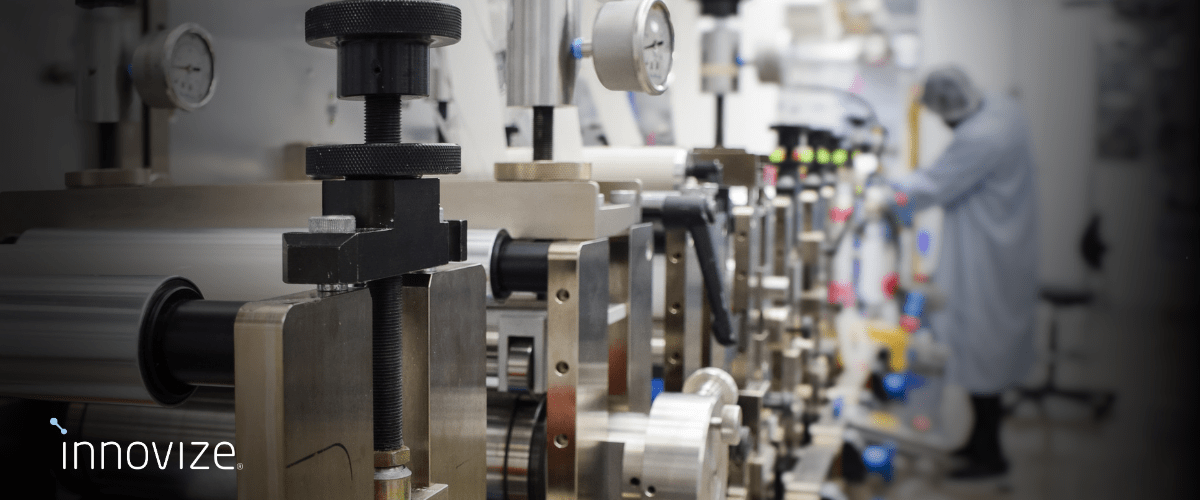
These characteristics have direct implications for converting. Web tension, pressure, cut, and lamination conditions all need to be controlled closely to avoid stretch, distortion, drift, or localized damage to the material. In practice, the most robust process is usually the one that minimizes unnecessary mechanical stress while maintaining repeatability.
Because hydrogels are highly responsive to pressure, tension, and environmental conditions, the converting strategy must be tailored to the specific material chosen, and re-evaluated if another material is selected. Evaluating how a hydrogel’s chemistry and physical characteristics interact with manufacturing processes early in development helps prevent the waste of time, resources, and funds.
At Innovize, our engineering teams have developed specialized systems designed to select and test materials, and maintain highly controlled specifications throughout production. These fine-tuned selections and systems help preserve hydrogel integrity while supporting repeatable manufacturing outcomes. The goal is not simply to process the material, but to maintain the hydration, conductivity, adhesion, or absorption characteristics the device was designed to deliver and we committed to create.
Managing Moisture During Conversion
Moisture management is one of the most important manufacturing variables for hydrogels. Because water content is tied directly to adhesion, the conductivity, mechanical behavior, exposure time, ambient humidity, packaging design, and storage conditions all need to be defined in the early stages of a project.
Hydrogel manufacturing does not end at conversion. The material’s sensitivity to moisture loss and environmental exposure means packaging must also be considered early in development. By evaluating shelf-life requirements, handling limitations, and storage conditions upfront, Innovize helps customers develop packaging solutions that protect both product integrity and device performance throughout the product lifecycle.
Qualification and Risk
The most successful hydrogel programs begin with a clear assessment of material behavior and process risk. Key questions include whether the chemistry is well characterized, how sensitive it is to pressure and temperature, what verification method will confirm performance, and how incoming material will be qualified.
This stage is where many projects go off track. A material that performs well in the lab can become difficult to scale if batch-to-batch variability, moisture loss, adhesive compatibility, or process sensitivity are not addressed early.
For engineers, the practical goal is to define measurable critical-to-quality attributes, such as dimensional drift, peel strength, impedance, moisture loss, and batch repeatability. Those are the variables that determine whether a hydrogel design can move from prototype to production with confidence.
Summing Up Common Failure Modes
Hydrogel projects often fail for predictable reasons:
- Dimensional instability during converting.
- Moisture loss during production, storage, or shipping.
- Adhesive incompatibility or interfacial delamination.
- Registration errors during lamination or assembly.
- Inadequate incoming material controls or qualification.
The common thread is not the material alone; it is the interaction between the material and the process. Successfully working with hydrogels requires process adaptation, not just standard equipment settings.
Innovize Approach
For wearable medical devices, hydrogel performance depends on far more than material selection alone. Comfort, adhesion, conductivity, and shelf life can all be affected by how the material is handled, converted, assembled, and packaged.
Innovize combines hydrogel material knowledge with specialized converting expertise, developing statistically controlled manufacturing processes that protect critical material properties throughout production. By understanding both the chemistry of the hydrogel and the realities of large-scale manufacturing, we help customers bring complex wearable devices to market with greater confidence.